Xian
To Break Faith with Fate
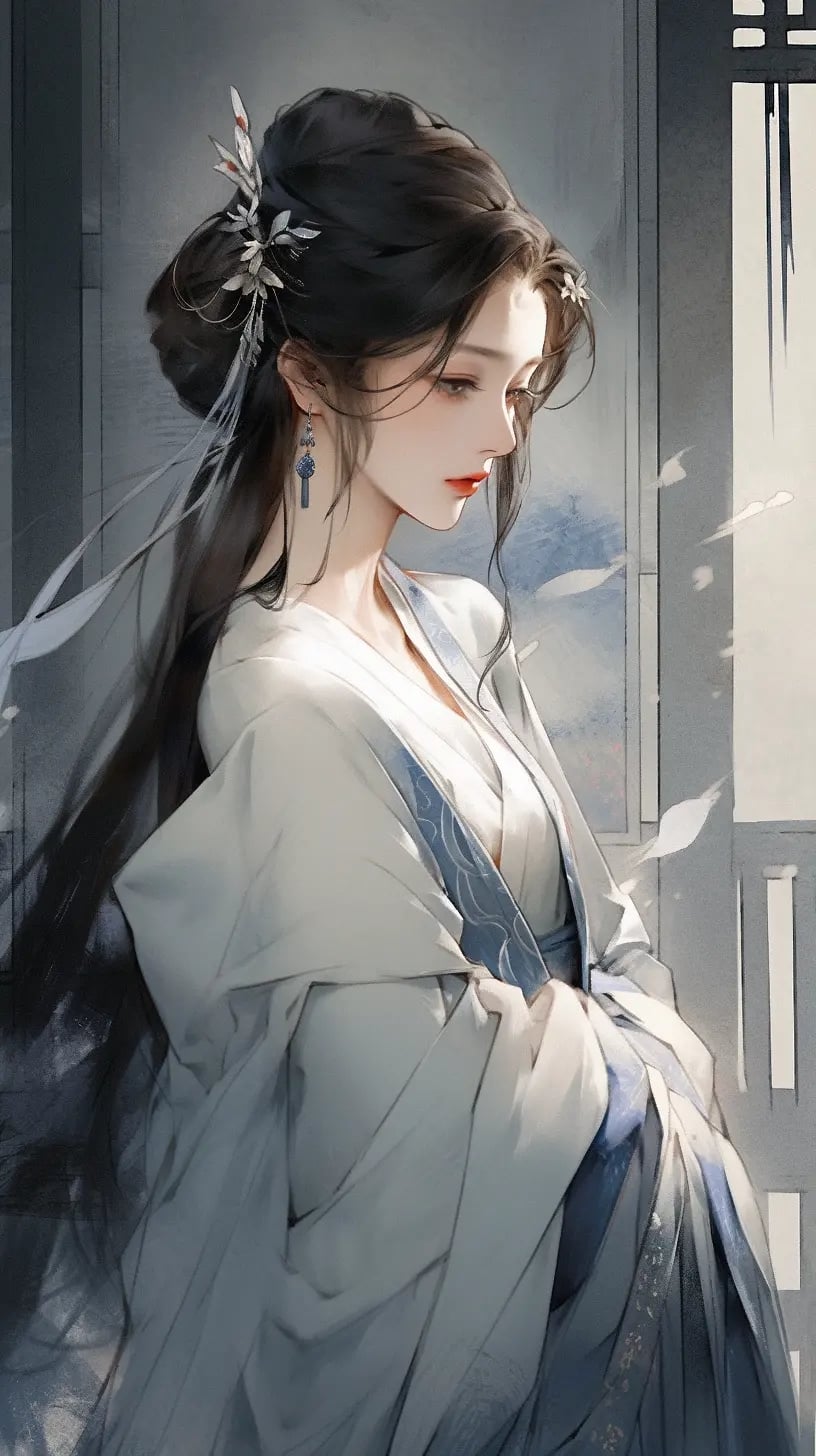
Mortals, unneeded and unwanted by Heaven, are doomed to be crushed by the weight of their own mediocrity; dust falls to the earth and is forgotten by the Sky. A bowl is shaped from the fallen dust, but it is the hollow that makes it a bowl; and so a Xian is born hollow, into a body meant for finer things than she will ever be. She knows the emptiness as a hunger. And so, she spends her life being filled: by the clan that lends her its dead, by the craft that claims her hands, by the Heaven she climbs toward and never holds. But a bowl is treasured, though it be made of clay, because it is empty; and a bowl which completes itself becomes full at last, and good for nothing at all — and is still just as easily shattered.
Singular Xian
Denominative Xian
Endonym Syenshendsu, Syusyendsu, Senshinzoku, Kanin, Kandsu, Shyang, Hoosen, Iamawa, etc.
Pick up the brush, or the blade, or the cup. Her hands almost know. There is a competence in her that is older than her training, that comes from the kind of body she has and the name she carries rather than the years she has spent — she is more skillful, without trying, without learning, than people who have practiced longer. But little of the skill is hers. A chair supports because it is a chair, a blade cuts because it is a blade, and a Xian moves through the world with the residue of a category meant for things that do not die. But of course, a Xian does die — mostly. Set down the tool, put off the name, and what is left has not yet been told what to be.
So she is always filled by something. A clan spanning a hundred years, an office spanning a thousand, a band of brothers sworn to each other only: the role she steps into tells her, for a while, who she is. From birth to death she is not her own person; she carries slivers of ancestors she never met, and will scatter slivers of herself to descendants not yet born — a person assembled out of a thousand small inheritances, who is inherited in turn. The cicadas thin as the days grow short, and bamboo blooms this decade or the next; and come the next spring she belongs to the next world, for even in death a Xian is but one of many that came before and many who will come after. A Xian belongs, always, to something. It is the one thing she cannot not do.
There is something vast, something watchful without eyes, that weighs a Xian’s every act and every silence against a standard she will never quite meet. Every Xian has seen, in the shadow of herself, the thing that she is not. To watch it from the outside is a kind of ruin, for it is everything a mortal reaches for and never holds. And so she can feel, almost, the way out. The truly immortal are, without trying, necessary: a thing that cannot but be. The Xian is that only by reaching, but she alone may reach; nothing else that dies may walk the road that leads above the world. There are joys in this life that are worth staying for: rain after endless drought; friends come from far away; the night of the red veil; a name written high above the others; but for her kind, even to stand still is a choice. For a door was made for her, and there it waits — until the moment that all doors close. She who would cling to what she loves will, eventually, have loved the world enough to belong at the last to the leaving of it.
But though the road is never walked in vain, neither can she who would walk it ever arrive where it would lead. The frog may never truly leave the well, for it discovers only larger wells which for a time seem boundless; climb high enough and there is found only a higher heaven, and a longer way to fall. At the summit the wine will not warm her and the rain will not wet her, and she belongs at last to no place and to no hour. She who would leave behind her mortality will find it gathers behind her wearing her own face, an enemy assembled out of the parts of her that would not consent to be replaced, and grows larger as she grows lighter. She who departs on the endless road may find everything she once was has been discarded along the way; and at the end of the endless road, there she finds that everything she has become still shall die. The endless road was not meant to be trodden by finite beings: those who belong to the class of things that cease will all, in the end, return to the place they once called home; but who falls upon the road will find that she has, somewhere on the ceaseless path, left home itself behind.